
As a STEM student, I knew that trying to master complicated neuroanatomy and cognitive pathways in three weeks would be a challenge, but not one I was willing to shy away from. During my session in Stockholm, I’m taking the class Neuroscience of Emotion with Élodie Cauvet, which revolved around how emotional expression is represented on both large and small scales. With my neuroscience background, I knew that I would learn a lot of interesting material from this class — and knowing how my credits would transfer back to my home university made the decision to take this class easy.
Classes here are much longer than the typical 50 minute lectures I’ve gotten used to, but the almost three hour long classes are much better suited for a study abroad format and allowed for me to get to know my classmates better. There is a wide variety of majors and minors represented in the class, and although I’m studying neuroscience, there are also many psychology, biology, and cognitive science students representing their universities.
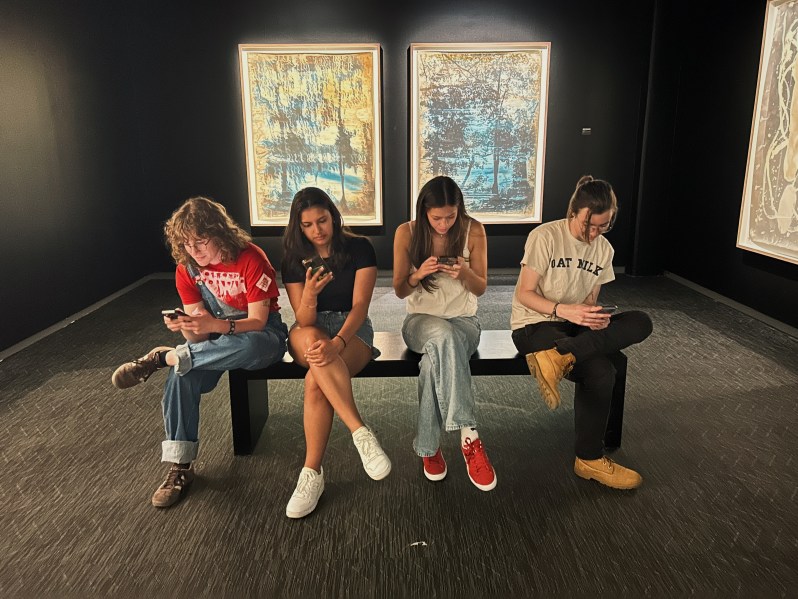
Neuroscience of Emotion has so many components to it. Each lecture focused on a different aspect, such as how sensory inputs affect our emotions and how our emotion regulation strategies change as we age. Trying to learn the amount of content required for the subject has been daunting, but a review of information daily along with engaging activities made the course load manageable and interesting. All of the information we learned throughout the session culminated in a final group project to create a board game that would teach players about affective neuroscience.
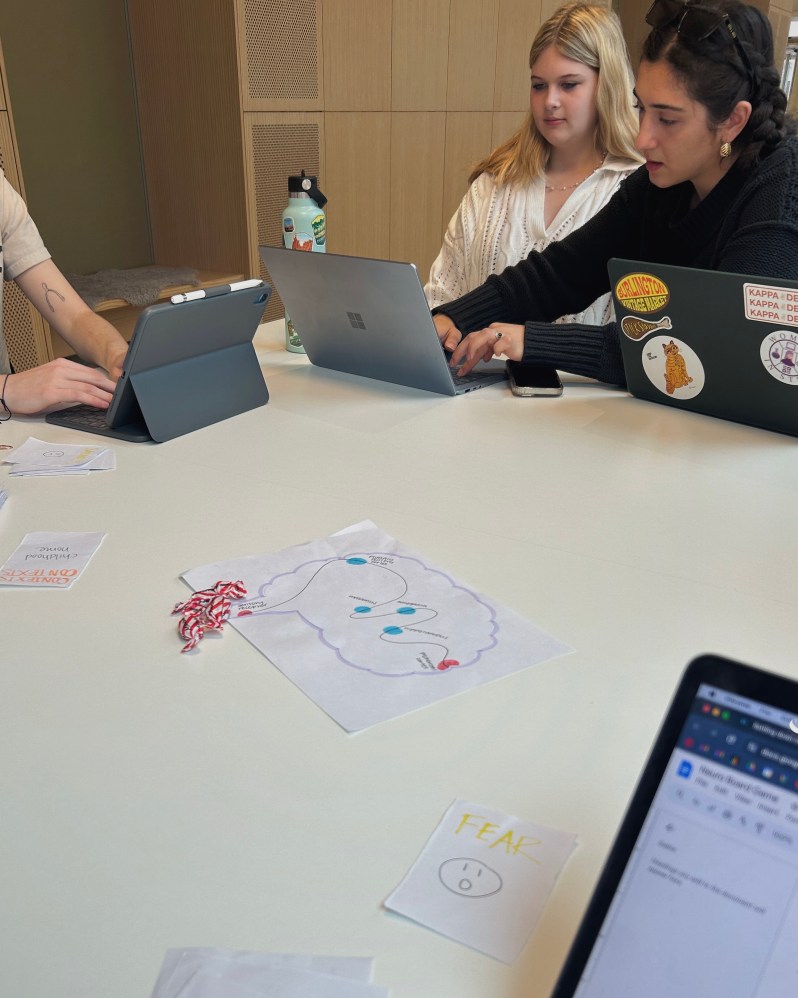
Our group created a game involving improv and storytelling, and not to be biased, but it’s very fun (and informative!)
This is us working on an early draft before class, with pieces of candy as game tokens.
Our class had two Field Studies: an invited guest speaker to DIS and a journey to the Fotografiska Museum. The guest speaker was Björn Ekenberg, a board game creator and designer who taught the class how to design our final projects. He explained the mechanisms behind common board games, how to integrate teaching into our games, and we were able to ask him questions in order to shape our own projects. I ended up learning a lot about game design, especially in relation to board games that I’ve played before, and my group ended the day with a lot of ideas about how to integrate new ideas into our project.
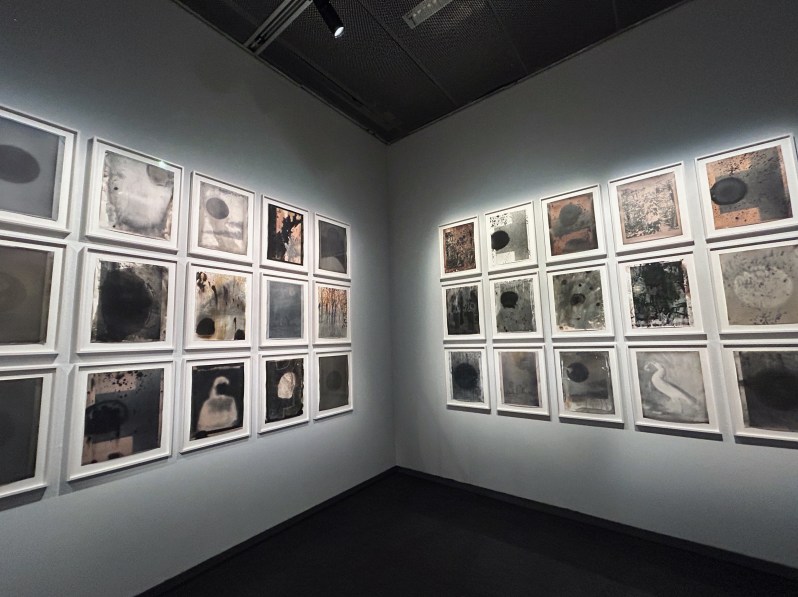
The other Field Study our class went on was a trip to the Fotografiska Museum to learn about how emotion is conveyed, both in the art itself and how we felt looking at the exhibitions. We had the opportunity to go to the museum on our first day of class, and it was a really great way to experience Stockholm as well as getting introduced to the topic we would spend the next three weeks studying.
I was able to recognize emotional triggers in the photography without yet knowing why they affected me, and throughout the course I was able to name specific neural pathways that played a role in expressing the different emotions I experienced. Being able to see how my learning developed in real time by reflecting on our trip to the Fotografiska Museum made the material so much more salient and applicable to my life, both inside and outside of the classroom.
As the session comes to an end, I’m very grateful to Élodie and my classmates for making my experience in Stockholm so fun. I’m going to be leaving this class a more well-rounded student, as well as a certified board game expert.